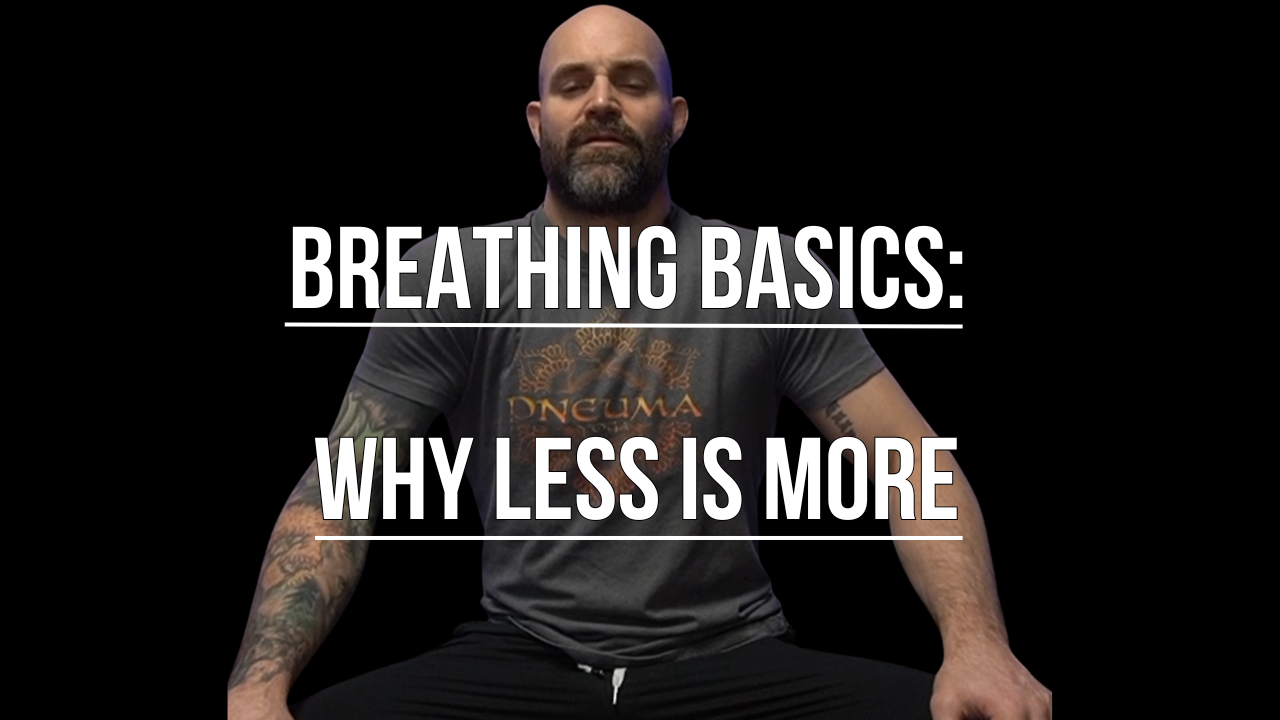
Breathing Basics: Why Less Is More
Breath is not just something you do—it’s something that moves you.
Every movement in your body is influenced by your breathing. Your ribs expand, your spine responds, and your tissues shift with every inhale and exhale.
Breath is the body’s internal rhythm.
When breathing is restricted, movement becomes restricted.
When breathing is smooth, movement becomes fluid.
If you want to move better, it starts with how you breathe.
Breath Is Movement
Breath is not just something you do—it’s something that moves you.
Every movement in your body is influenced by your breathing. Your ribs expand, your spine responds, and your tissues shift with every inhale and exhale.
Breath is the body’s internal rhythm.
When breathing is restricted, movement becomes restricted.
When breathing is smooth, movement becomes fluid.
If you want to move better, it starts with how you breathe.
Breathing Is More Complex Than It Seems
At first glance, breathing looks simple: inhale, exhale, repeat.
But beneath that simplicity is a system influenced by:
Biochemistry — how your body uses oxygen and carbon dioxide
Biomechanics — how your ribs, diaphragm, and posture move
Psychosocial factors — stress, habits, and environment
Every breath reflects your internal state.
And over time, inefficient breathing patterns can reinforce tension, fatigue, and dysregulation in the body.
The Problem: Too Much Breath
One of the most common issues is not a lack of breath…
…but too much of it.
Over-breathing—moving more air than your body needs—can lead to:
Increased tension
Reduced efficiency
Nervous system imbalance
The solution isn’t to breathe bigger.
It’s to breathe more appropriately.
The Goal: Reduce Rate and Volume
Breath reeducation is not about forcing technique.
It’s about refining the system.
Two key variables:
Respiration rate (how fast you breathe)
Respiratory volume (how much air you move)
When both begin to decrease—naturally and without strain—the body becomes more efficient.
A Simple Exploration
Try this:
Count how many breaths you take in one minute
Then slow it down:
Inhale for ~5.5 seconds
Exhale for ~5.5 seconds
Don’t force the breath.
Let it become quieter.
Let it become smoother.
Let the Breath Move the Body
Instead of trying to control your breath…
Allow your breath to guide movement from within.
Let the ribs expand.
Let the body respond.
This creates change at a subtle level of the body—the soma.
And subtle changes, practiced consistently, create powerful results.
Final Thought
Better breathing isn’t about doing more.
It’s about doing less—more intentionally.
Less breath.
Less effort.
More awareness.
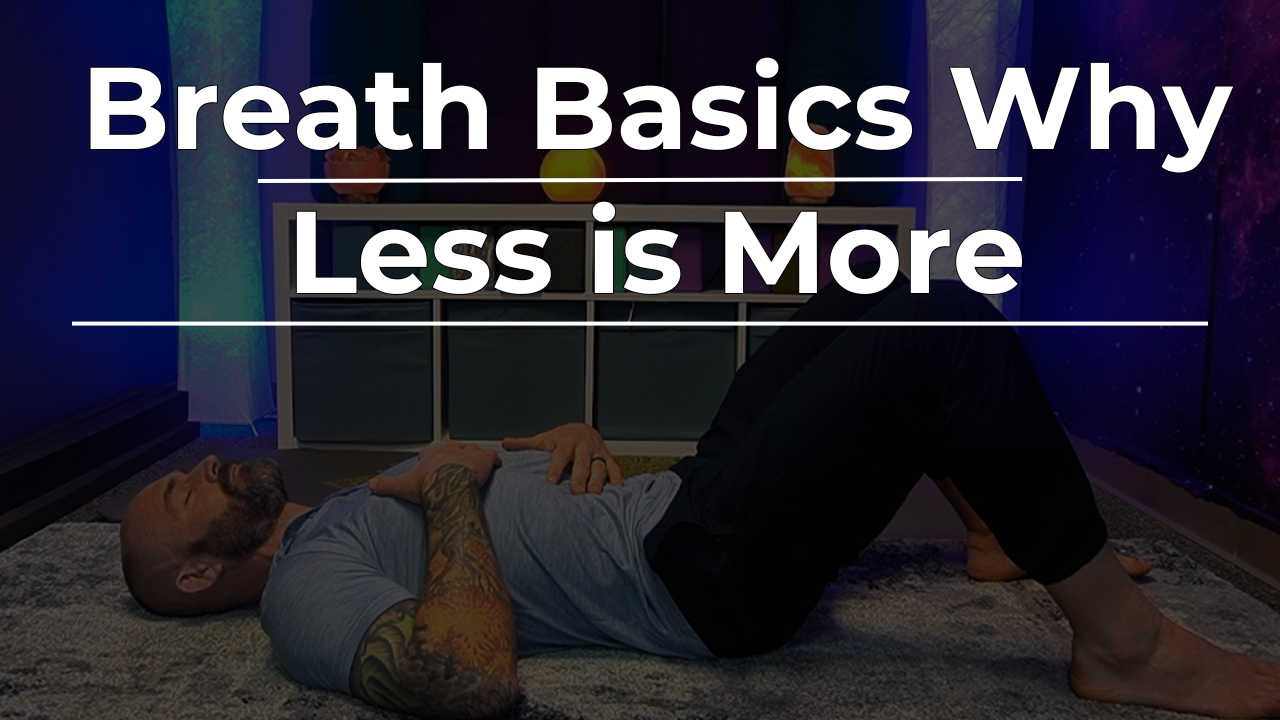
Breath Basics: Why Less is More.
Breathing is something we do all day…
But rarely something we pay attention to.
Most people think better breathing means taking deeper breaths.
In reality, it often means the opposite.
Less breath.
Slower breath.
Quieter breath.
Your breathing is influenced by your body, your stress, and your habits—and over time, it can either support your health or slowly work against it.
Breath Is Movement
Breath is not just something you do—it’s something that moves you.
Every motion in your body is influenced by your breathing. Your ribs expand, your spine responds, your tissues subtly shift with every inhale and exhale. Breath is the body’s internal rhythm.
When breathing is restricted, movement becomes restricted.
When breathing is smooth, movement becomes fluid.
If you want to move better, it starts with how you breathe.
Breathing Is More Complex Than It Seems
At first glance, breathing looks simple: inhale, exhale, repeat.
But underneath that simplicity is a complex system influenced by:
Biochemistry (CO₂ tolerance, oxygen delivery)
Biomechanics (ribs, diaphragm, posture)
Psychosocial factors (stress, habits, environment)
Every breath reflects your internal state.
And over time, poor breathing patterns can reinforce tension, stress, and inefficiency in the body.
The Problem: Too Much Breath
One of the most common issues is over-breathing.
Not necessarily faster—but more volume than the body actually needs.
This can lead to:
Increased tension
Reduced efficiency
Dysregulated nervous system
The solution is not to take deeper breaths.
The solution is to take more appropriate breaths.
The Goal: Reduce Rate and Volume
Breath reeducation isn’t about forcing technique.
It’s about refining the system.
Two key variables:
Respiration rate (how fast you breathe)
Respiratory volume (how much air you move)
When both begin to decrease—naturally and without strain—the system becomes more efficient.
A Simple Exploration
Try this:
Count how many breaths you take in one minute
Then shift your breathing to:
Inhale: 5.5 seconds
Exhale: 5.5 seconds
Don’t force it.
Don’t make it big.
Let the breath become quieter.
Let the body move with it.
Let the Breath Move the Body
Instead of controlling your breath…
Allow your breath to guide movement from within.
This creates change at a subtle level of the body—what we might call the soma.
And subtle changes, over time, create profound results.
Final Thought
Less breath.
Less effort.
More awareness.
That’s where real change begins.