What Is Breathing?
The Most Important Thing We Do Every Day
Most people think breathing is simple.
You inhale oxygen.
You exhale carbon dioxide.
End of story.
But breathing is one of the most complex and fascinating processes in the human body.
The Most Important Thing We Do Every Day
Most people think breathing is simple.
You inhale oxygen.
You exhale carbon dioxide.
End of story.
But breathing is one of the most complex and fascinating processes in the human body.
In fact, breathing influences nearly every aspect of your health.
Your energy.
Your movement.
Your posture.
Your emotions.
Your nervous system.
Your ability to focus.
Your ability to relax.
Everything begins with the breath.
Yet most of us have never been taught how it works.
This article is the first in a series exploring how and why to breathe better.
Let's begin with the most basic question:
What is breathing?
Breathing Is Not Just About Oxygen
If breathing were only about oxygen, the solution would be simple.
Take bigger breaths.
Get more oxygen.
Feel better.
But that isn't how the body works.
Breathing is actually a balancing act between two gases:
Oxygen (O₂)
and
Carbon Dioxide (CO₂)
Most people think carbon dioxide is simply a waste product.
It isn't.
Carbon dioxide plays a crucial role in helping oxygen leave the bloodstream and enter the cells where it is needed.
Without sufficient carbon dioxide, oxygen delivery becomes less efficient.
This means breathing more is not always better.
The goal is not maximum breathing.
The goal is efficient breathing.
Breathing Creates Energy
Every cell in your body relies on oxygen to produce energy.
Inside the cells, oxygen is used to create ATP—the body's primary energy currency.
No oxygen.
No energy.
But this process also depends on proper carbon dioxide regulation.
Healthy breathing supports the balance required for efficient energy production.
This is one reason why dysfunctional breathing patterns can leave people feeling fatigued, anxious, or mentally foggy even when oxygen levels appear normal.
Breathing Is Movement
Breathing is not just something your lungs do.
Breathing is movement.
Every breath creates motion throughout the body.
The ribs expand.
The diaphragm descends.
The abdomen responds.
The spine subtly moves.
The pelvic floor adapts.
The nervous system receives constant feedback from these movements.
In many ways, breathing is the rhythm that animates the entire body.
If you want to move better, breathing better is often the place to begin.
Breathing Influences the Nervous System
Every breath sends information to the brain.
Fast breathing often communicates urgency.
Slow breathing often communicates safety.
The breath acts as a direct pathway into the autonomic nervous system.
This means your breathing patterns can influence:
• Stress levels
• Emotional regulation
• Heart rate
• Recovery
• Focus
• Sleep quality
The way you breathe today influences the state you experience today.
Conscious and Unconscious
Breathing occupies a unique place in human physiology.
It happens automatically.
You do not need to think about it.
You breathe while sleeping.
You breathe while working.
You breathe while driving.
Yet breathing can also become conscious.
At any moment you can bring awareness to the breath.
You can observe it.
Feel it.
Influence it.
Train it.
This makes breathing one of the most powerful tools available for self-awareness and personal transformation.
It is the bridge between the conscious and unconscious mind.
The First Skill: Observation
Most people want breathing techniques.
But before techniques comes awareness.
Before changing the breath, we must learn to observe it.
Can you feel where your breath moves?
Can you notice tension?
Can you notice asymmetry?
Can you notice effort?
The breath is constantly providing information.
The question is whether we are paying attention.
A Five-Minute Practice
Set aside five minutes today.
Sit comfortably.
Do not try to change your breathing.
Simply observe.
Notice:
• The inhale
• The exhale
• Where the breath moves
• How the body responds
• Whether the breath feels smooth or restricted
Allow yourself to become curious.
Not judgmental.
Not corrective.
Curious.
Awareness is the foundation of all breath training.
Looking Ahead
In the next article we'll explore how breathing affects the body.
We'll look at movement, posture, tension patterns, and why many physical issues are deeply connected to the way we breathe.
Because breathing isn't just about surviving.
It's about learning how to thrive.
And every journey begins with awareness.
The first step is simply noticing the breath.
Vibration and Sound for deep healing potential
The Sounds Around You Become the Sounds Within You
The sounds we surround ourselves with matter.
They become part of our internal atmosphere.
Some people can exhaust you after only a few minutes of listening.
Others leave you feeling peaceful and energized.
Listen to a chaotic political argument and feel your body afterward.
Then listen to a peaceful chant or sit beside moving water.
The body responds immediately.
Sound is medicine.
There is a sound constantly shaping your life.
Not only the sounds around you…
but the sounds within you.
Thoughts are subtle vibrations continuously moving through the mind and nervous system.
And over time, those thoughts become patterns.
Patterns in emotion.
Patterns in tension.
Patterns in behavior.
Patterns in health.
Most people are repeating nearly the same internal sounds every single day.
The same worries.
The same stories.
The same judgments.
The same arguments.
The same emotional reactions.
We reinforce these patterns so often that they begin to feel like reality itself.
But in many cases, these repetitive mental sounds are deeply exhausting to the system.
Sound and the Ether Element
In yogic philosophy, sound is associated with the ether element—the most subtle dimension of experience.
Ether represents space, vibration, resonance, and connection.
Before movement exists, there is vibration.
Before form exists, there is sound.
This is why many ancient traditions placed such enormous importance on mantra, chanting, prayer, and sacred sound.
Sound shapes consciousness.
Your Inner Environment Matters
Most people carefully choose what foods they eat…
but rarely consider the sounds they consume daily.
Think about how different sounds affect you:
stressful television
arguments
chaotic music
constant news cycles
angry conversations
overstimulation
Now compare that to:
nature
silence
flowing water
calming music
mantra
chanting
humming
The nervous system responds differently to each environment.
Sound influences physiology.
Some sounds scatter the system.
Others create coherence.
Why Chanting Works
Chanting is not really about religion.
It is about vibration.
The sound itself becomes the practice.
In yoga, bija mantras are considered “seed sounds” that help unlock deeper energetic and psychological states.
The goal is not intellectual understanding.
The goal is resonance.
When you chant or hum repeatedly:
breathing slows
mental activity decreases
awareness becomes more embodied
vibration moves through the tissues
nervous system tension softens
The repetitive thought loops begin losing momentum.
You stop feeding the noise.
And eventually, you begin feeling instead of constantly thinking.
Start with Humming
If chanting feels uncomfortable or unfamiliar, start with humming.
Simple humming is incredibly powerful.
Take a slow inhale through the nose.
Then softly hum on the exhale.
Feel the vibration:
in the chest
throat
jaw
face
skull
Whenever thoughts arise, gently return to the vibration.
This is the practice.
Over time, the internal environment becomes quieter and clearer.
The Sounds Around You Become the Sounds Within You
The sounds we surround ourselves with matter.
They become part of our internal atmosphere.
Some people can exhaust you after only a few minutes of listening.
Others leave you feeling peaceful and energized.
Listen to a chaotic political argument and feel your body afterward.
Then listen to a peaceful chant or sit beside moving water.
The body responds immediately.
Sound is medicine.
Kirtan and Collective Energy
One beautiful introduction to sound practice is kirtan—devotional Indian music and chanting.
Kirtan uses repetition, rhythm, breath, and vibration to shift awareness out of repetitive mental activity and into direct experience.
One of my favorite artists is Krishna Das.
The music is simple, repetitive, emotional, and deeply regulating to the nervous system.
You do not need to understand the language.
The body understands vibration.
Final Thought
Healing is not only physical.
It is vibrational.
The thoughts we repeat…
the sounds we consume…
the words we speak…
the environments we live within…
all shape the quality of our inner world.
Practice tuning your inner instrument.
Hum.
Chant.
Sit in nature.
Listen deeply.
And slowly, the scattered noise begins turning into harmony.
OM Shanti Shanti Shanti ✨
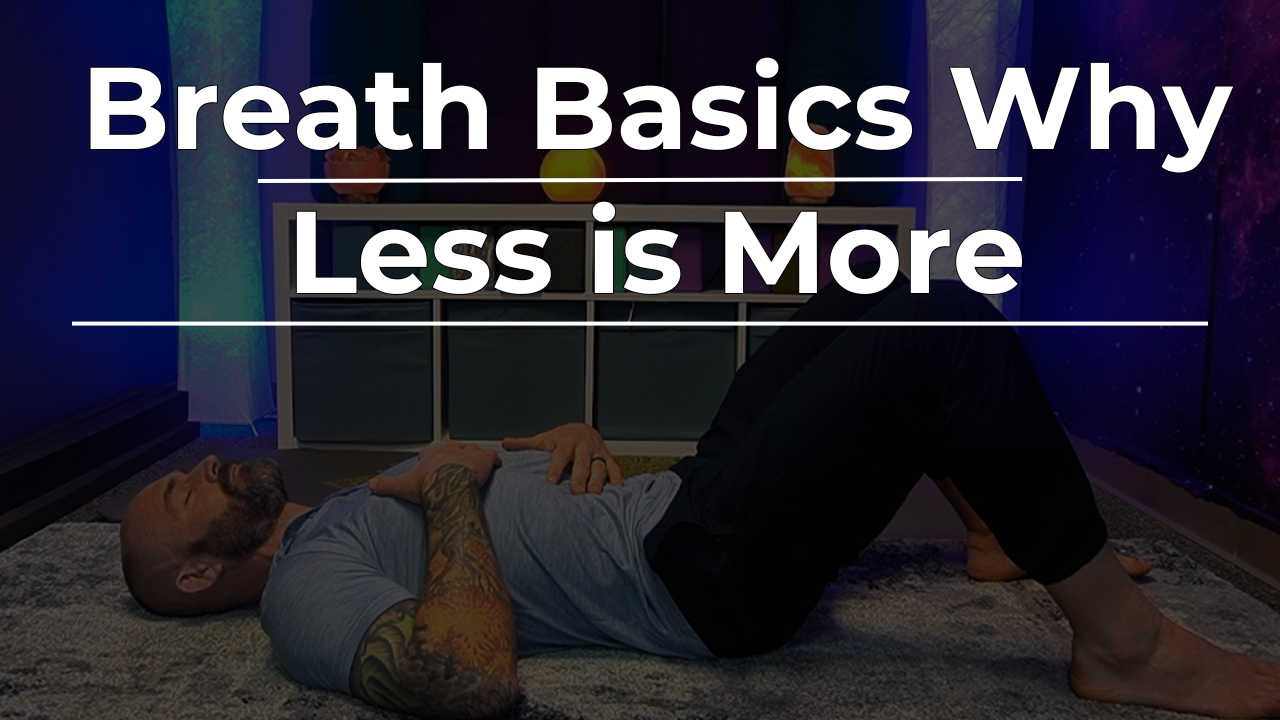
Breath Basics: Why Less is More.
Breathing is something we do all day…
But rarely something we pay attention to.
Most people think better breathing means taking deeper breaths.
In reality, it often means the opposite.
Less breath.
Slower breath.
Quieter breath.
Your breathing is influenced by your body, your stress, and your habits—and over time, it can either support your health or slowly work against it.
Breath Is Movement
Breath is not just something you do—it’s something that moves you.
Every motion in your body is influenced by your breathing. Your ribs expand, your spine responds, your tissues subtly shift with every inhale and exhale. Breath is the body’s internal rhythm.
When breathing is restricted, movement becomes restricted.
When breathing is smooth, movement becomes fluid.
If you want to move better, it starts with how you breathe.
Breathing Is More Complex Than It Seems
At first glance, breathing looks simple: inhale, exhale, repeat.
But underneath that simplicity is a complex system influenced by:
Biochemistry (CO₂ tolerance, oxygen delivery)
Biomechanics (ribs, diaphragm, posture)
Psychosocial factors (stress, habits, environment)
Every breath reflects your internal state.
And over time, poor breathing patterns can reinforce tension, stress, and inefficiency in the body.
The Problem: Too Much Breath
One of the most common issues is over-breathing.
Not necessarily faster—but more volume than the body actually needs.
This can lead to:
Increased tension
Reduced efficiency
Dysregulated nervous system
The solution is not to take deeper breaths.
The solution is to take more appropriate breaths.
The Goal: Reduce Rate and Volume
Breath reeducation isn’t about forcing technique.
It’s about refining the system.
Two key variables:
Respiration rate (how fast you breathe)
Respiratory volume (how much air you move)
When both begin to decrease—naturally and without strain—the system becomes more efficient.
A Simple Exploration
Try this:
Count how many breaths you take in one minute
Then shift your breathing to:
Inhale: 5.5 seconds
Exhale: 5.5 seconds
Don’t force it.
Don’t make it big.
Let the breath become quieter.
Let the body move with it.
Let the Breath Move the Body
Instead of controlling your breath…
Allow your breath to guide movement from within.
This creates change at a subtle level of the body—what we might call the soma.
And subtle changes, over time, create profound results.
Final Thought
Less breath.
Less effort.
More awareness.
That’s where real change begins.
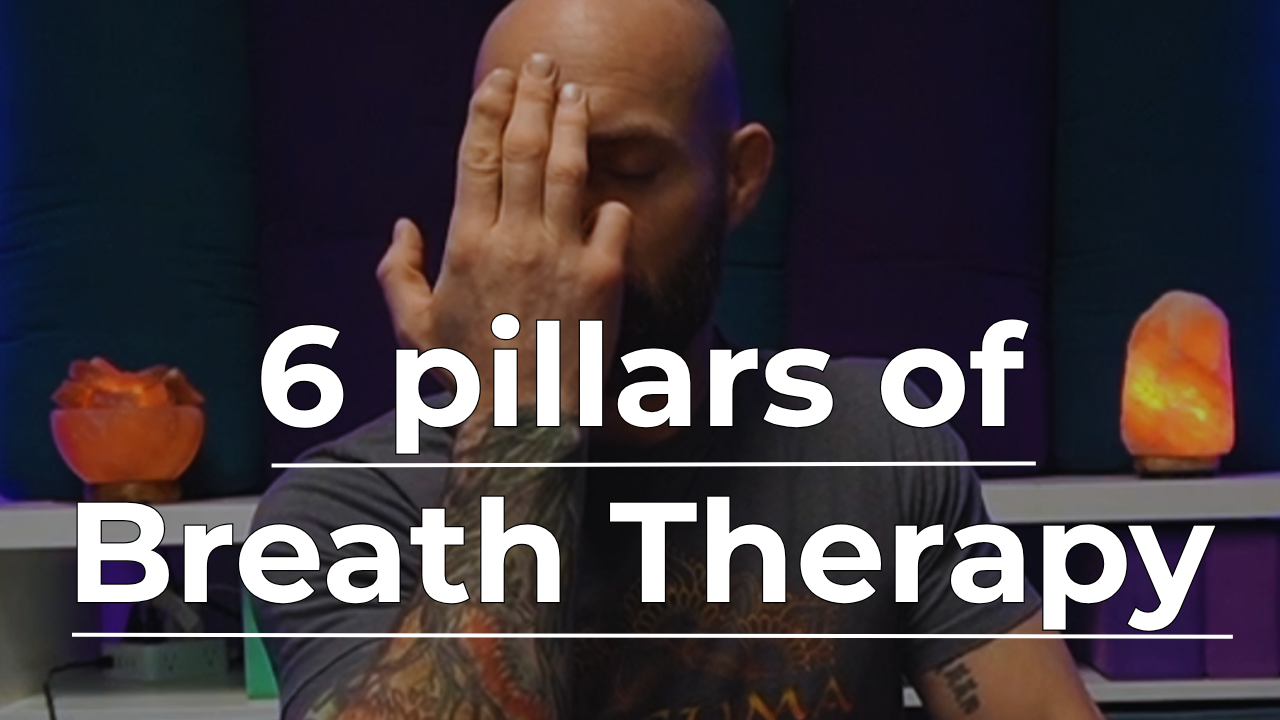
Breath Therapy: 6 Pillars to Wellness Through Breathing
Most people think of breathing as automatic.
Something that just happens in the background.
But over time, through my own practice, I’ve started to see it differently.
Breathing is not just a passive function—it’s something that influences nearly every system in the body.
How you recover.
How much energy you have.
How your body holds tension.
How you move.
How you respond to stress.
To make this more clear and practical, I’ve started organizing breath therapy into six pillars.
Most people think of breathing as automatic.
Something that just happens in the background.
But over time, through my own practice, I’ve started to see it differently.
Breathing is not just a passive function—it’s something that influences nearly every system in the body.
How you recover.
How much energy you have.
How your body holds tension.
How you move.
How you respond to stress.
To make this more clear and practical, I’ve started organizing Breath Therapy into six pillars.
1. Recovery
The Biology of Breathing
Recovery is not just about rest—it’s about how efficiently your body repairs itself.
Breathing plays a key role in:
circulation of oxygen and nutrients
lymphatic flow (your body’s detox system)
activating the parasympathetic nervous system
When breathing is restricted or shallow, recovery is limited.
When breathing is deep and controlled, the body shifts into a state where repair can happen more effectively.
2. Energy
The Chemistry of Breathing
Energy isn’t just about taking in more oxygen.
It’s about how well your body uses it.
Carbon dioxide (CO₂) plays a major role in this process.
It helps release oxygen into your tissues where it’s actually needed.
When breathing is inefficient:
oxygen delivery is reduced
energy levels drop
When breathing is trained:
oxygen is used more effectively
endurance improves
3. Pain
The Neurology of Breathing
Pain is often tied to patterns in the nervous system.
How you sit, move, and breathe creates habits in the body.
Over time, these patterns can lead to:
chronic tension
stiffness
discomfort
Through breath and somatic movement, you can begin to:
interrupt these patterns
retrain muscular systems
restore more natural movement
4. Strength
The Physiology of Breathing
Breathing is deeply connected to your core.
The diaphragm works together with:
abdominal muscles
pelvic floor
spinal stabilizers
When this system is coordinated:
strength improves
movement becomes more efficient
stability increases
Breathing becomes a foundation for functional strength—not separate from it.
5. Stress / Anxiety
Regulation Through Breathing
Your breath directly influences your nervous system.
Fast, shallow breathing is often linked to stress and anxiety.
Slow, controlled breathing signals safety to the body.
Over time, practicing this builds:
resilience to stress
awareness of your internal state
the ability to shift how you feel
6. Digestion & Overall Health
Agni & Internal Function
Breathing influences internal systems in ways many people don’t realize.
From a Western perspective:
diaphragmatic breathing supports digestion
nasal breathing improves sleep
oxygenation supports cellular health
From a yoga perspective, this connects to agni—your internal fire.
You can think of agni as:
👉 your body’s ability to digest, process, and transform energy
When breathing improves, these internal systems tend to function more efficiently.
Closing
What I’ve found in my own practice is that breathing is not simple.
It’s something that has to be learned, practiced, and refined over time.
But when you begin to work with it intentionally,
you start to notice changes across all of these areas.
Not all at once.
Not instantly.
But consistently.
And that’s what this work is really about.
What’s Next
In the coming weeks, I’ll break down each of these pillars more deeply,
and share the specific practices I use and teach.